ExpertsTeachers
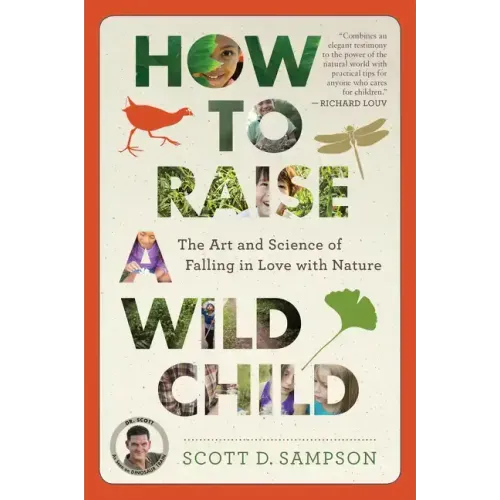
How to Raise a Wild Child: The Art and Science of Falling in Love with Nature - Paperback
How to Raise a Wild Child: The Art and Science of Falling in Love with Nature - Paperback
Couldn't load pickup availability
by Scott D. Sampson (Author)
By the beloved and wildly popular host of the PBS Kids show Dinosaur Train, here is the book every parent needs: a rousing call to connect our kids to the natural world, filled with tips and advice.
The average North American child now spends about seven hours a day staring at screens and mere minutes engaged in unstructured play outdoors. Yet recent research indicates that experiences in nature are essential for healthy growth.
Regular exposure to nature can help relieve stress, depression, and attention deficits. It can reduce bullying, combat obesity, and boost academic scores. Most critical of all, abundant time in natural settings seems to yield long-term benefits in kids' cognitive, emotional, and social development.
How to Raise a Wild Child is a timely and engaging antidote, offering teachers, parents, and other caregivers the necessary tools to engender a meaningful, lasting connection between children and the natural world.
Distilling the latest research in multiple disciplines, Sampson reveals how adults can help kids fall in love with nature--enlisting technology as an ally, taking advantage of urban nature, and instilling a sense of place along the way.
"In a time when the connection between humans and the rest of nature is most vulnerable, Scott offers parents and teachers a book of encouragement and knowledge, and to children, the priceless gift of wonder."--Richard Louv, author of Last Child in the Woods and The Nature Principle
Front Jacket
The average North American child now spends about seven hours a day staring at screens and mere minutes engaged in unstructured play outdoors, a dramatic transformation within the past generation. Yet recent research indicates that experiences in nature are essential for healthy growth. Regular exposure to nature can help relieve stress, depression, and attention deficits. It can reduce bullying, combat obesity, and boost academic scores. Most critical of all, abundant time in natural settings seems to yield long-term benefits in kids cognitive, emotional, and social development.
To date, no book has offered teachers, parents, and other caregivers the necessary tools to engender a meaningful, lasting connection between children and the natural world. How to Raise a Wild Child is a timely and engaging antidote, showing how kids connection to nature changes as they mature, and empowering grown-ups to be strong mentors.
Distilling the latest research in multiple disciplines, Scott Sampson reveals how adults can help kids fall in love with nature enlisting technology as an ally, taking advantage of urban nature, and instilling a deep sense of place along the way."
Back Jacket
In a time when the connection between humans and the rest of nature is most vulnerable, Scott offers parents and teachers a book of encouragement and knowledge, and to children, the priceless gift of wonder. Richard Louv, author of Last Child in the Woods and The Nature Principle
The average North American child now spends about seven hours a day staring at screens and mere minutes engaged in unstructured play outdoors. Yet recent research indicates that experiences in nature are essential for healthy growth. Regular exposure to nature can help relieve stress, depression, and attention deficits. It can reduce bullying, combat obesity, and boost academic scores. Most critical of all, abundant time in natural settings seems to yield long-term benefits in kids cognitive, emotional, and social development. How to Raise a Wild Child is a timely and engaging antidote, offering teachers, parents, and other caregivers the necessary tools to engender a meaningful, lasting connection between children and the natural world.
With wisdom, intellect, and empathy, [Sampson] provides us with a bounty of simple yet profound ways we can enter this natural world, oftentimes starting in our very own backyards. Lili Taylor, actor, mom, and board member of the American Birding Association
[Sampson] makes a cogent case for the importance of cultivating a nature connection in children and offers thoughtful guidance on how to do so amid today's pressures of hectic, high-tech, increasingly urbanized life. Scientific American MIND
SCOTT D. SAMPSON is a dinosaur paleontologist, science communicator, and passionate advocate for connecting people with nature. He serves as vice president of research and collections and chief curator at the Denver Museum of Nature & Science, and as host and science adviser of the PBS KIDS television series Dinosaur Train. Sampson is also the program ambassador of Nature Rocks, a global initiative of The Nature Conservancy aimed at inspiring families to explore nature."
Author Biography
SCOTT SAMPSON is a dinosaur paleontologist and science communicator. He serves as vice president of research and collections at the Denver Museum of Nature and Science, and, as "Dr. Scott the Paleontologist," hosts the PBS KIDS television series Dinosaur Train.
Share